«Metropolis»: η διχασμένη πόλη του 1927 και η εκατονταετία που έρχεταιMetropolis: the divided city of 1927 and a centenary still ahead
Πώς ξεχωρίζουμε το ιστορικό έργο, τη διατήρησή του και τις ανακοινώσεις για τον εορτασμό του 2027.Separating the historic film, its preservation and the announced plans for its 2027 centenary.
Πόσο ουδέτερη μπορεί να είναι η αρχιτεκτονική μιας φανταστικής πόλης; Στο «Metropolis» του Φριτς Λανγκ, η διαίρεση ανάμεσα στους προνομιούχους και στους εργάτες αποκτά χωρική μορφή. Η γερμανική τεκμηρίωση πολιτιστικής κληρονομιάς περιγράφει μια πόλη οργανωμένη σε διακριτούς κόσμους πάνω και κάτω από την επιφάνεια.
Η πρώτη προβολή πραγματοποιήθηκε στο Βερολίνο στις 10 Ιανουαρίου 1927, σύμφωνα με το Ίδρυμα Friedrich-Wilhelm-Murnau. Η εκατονταετία ανήκει επομένως στο 2027, όχι στο 2026. Η ανακοίνωση του ιδρύματος στις 6 Ιουλίου 2026 αφορά τον σχεδιασμό εκδηλώσεων και νέας αποκατάστασης 4K, η διάθεση της οποίας προβλέπεται για το δεύτερο μισό του 2027. Πρόκειται για προγραμματισμό, όχι για έργο αποκατάστασης που δηλώνεται εδώ ολοκληρωμένο.
Η ταινία και το υλικό που επιβιώνει
Η γερμανική επιτροπή της UNESCO καταγράφει την ένταξη του «Metropolis» στο πρόγραμμα «Μνήμη του Κόσμου» το 2001. Η αναφορά αφορά την αξία του κινηματογραφικού τεκμηρίου, όχι την ανακήρυξη μιας πραγματικής πόλης ως μνημείου.
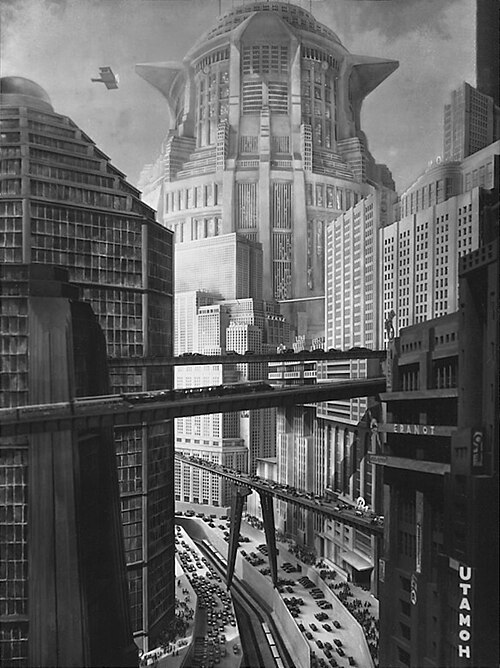
Η φωτογραφία του Χορστ φον Χάρμπου που συνοδεύει το άρθρο δείχνει το σκηνικό του κεντρικού εμπορικού δρόμου. Δεν είναι πρόβλεψη αστικής ανάπτυξης ούτε φωτογραφία υπαρκτής μητρόπολης του μέλλοντος. Είναι τεκμήριο της υλικής κατασκευής ενός κινηματογραφικού κόσμου.
Αυτό προσφέρει έναν γόνιμο τρόπο γνωριμίας με το έργο: να διαβάσουμε την πόλη όχι μόνο ως θέαμα, αλλά ως διάταξη πρόσβασης, εργασίας και εξουσίας. Το ποιος ανεβαίνει, ποιος μένει κάτω και ποιος κινείται ανάμεσα στους χώρους είναι ερωτήματα που προηγούνται κάθε αξιολόγησης της ταινίας.
Εικόνα: Φωτογραφία σκηνικού του 1927, όχι εικόνα πραγματικής πόλης.
How neutral can the architecture of a fictional city be? In Fritz Lang’s Metropolis, the division between privileged inhabitants and workers takes spatial form. German heritage documentation describes a city arranged into separate worlds above and below the surface.
The first screening took place in Berlin on 10 January 1927, according to the Friedrich-Wilhelm-Murnau Foundation. The centenary therefore falls in 2027, not 2026. The foundation’s announcement of 6 July 2026 concerns planned celebrations and a new 4K restoration, expected to become available in the second half of 2027. Those are announced plans, not a restoration presented here as already completed.
The film and its surviving material
The German UNESCO Commission records the inclusion of Metropolis in the Memory of the World programme in 2001. This concerns the value of the film as documentary heritage, not the designation of an actual city as a monument.
Horst von Harbou’s photograph accompanying this article shows the set representing the main commercial street. It is neither an urban-development forecast nor a photograph of a real future metropolis. It records the physical construction of a cinematic world.
That distinction suggests a productive route into the work: consider the city not only as spectacle, but as an arrangement of access, labour and power. Who rises, who remains below and who can move between the spaces are questions worth carrying into a viewing.
The film’s age, the dates of its restoration projects and the date of a modern announcement serve different purposes. Keeping them separate allows an archive feature to explain why the work remains available for discussion without manufacturing a new release or a premature anniversary.
Image: A set photograph from 1927, not a photograph of an actual city.
Σχόλια αναγνωστώνReader comments
Φόρτωση συζήτησης...Loading discussion...